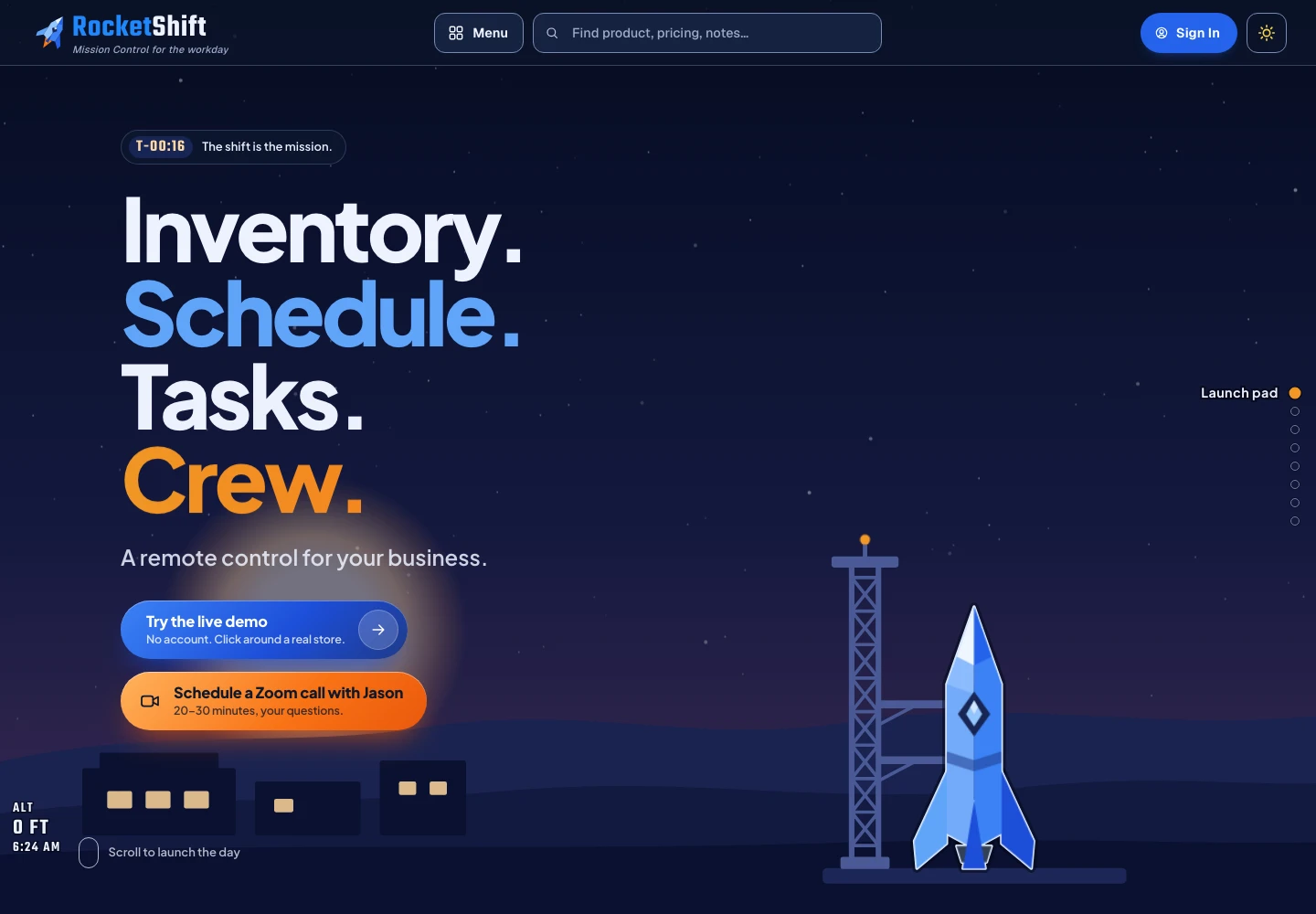
Inventory
“Can we make this one job easier?”
A focused answer to a familiar problem: count stock and restock two stores without the friction of scattered lists.
CASE STUDY / ROCKETSHIFT
From a better way to restock two The UPS Store locations to a connected platform for running a business.
Not a straight line. Not a master plan. A product—and a working partnership—that grew through building, listening, and discovering what was possible.
Follow the story* Yeah, we know this is a galaxy and not a universe.
Jason Armstrong is an independent franchise owner. RocketShift Studio and RocketShift are not affiliated with, sponsored by, or endorsed by The UPS Store, Inc. or UPS. Brand names describe Jason’s business background only.
Inventory & restocking
Two The UPS Store locations. Everyday work.
Product strategy · Design · Web & mobile
When you’ve spent more than twenty years running stores, you get to know the work from every angle. Helping customers. Making schedules. Reconciling the books. Taking inventory. And, yes, cleaning the toilets.
Jason Armstrong co-owns two The UPS Store franchises with his brother. One frustration kept coming back: knowing what each store needed and getting it restocked. First came handwritten lists, photographed and sent by text. Then shared Google Sheets—employees counting on an iPad, Jason and his brother checking the list on their iPhones.
It worked. But he wanted something simpler, more deliberate, and built around the way their stores actually operated.
“I still longed for an easier, more elegant technical solution.”
Jason Armstrong Founder, RocketShift · From his origin story
Jason wasn’t new to technology. His background included network engineering, security, and web design. He studied JavaScript, Python, and Swift, then followed a tutorial to build an inventory prototype.
The prototype worked. Adapting it to his stores—and continuing to evolve it—was the harder part. He set it aside, but the idea stayed.
In early 2026, he began working with Eve, his AI collaborator through OpenClaw. Jason brought the business context, direction, and judgment. Together, they built a usable, mobile-friendly inventory web app over a weekend.
That was the beginning, not the finish. Weeks of use in the stores brought bugs, feedback, and refinements. The useful tool emerged through that continued work.
03 / THE EVOLUTION
Inventory → MaxOut → RocketShift. Not simply new names for the same idea: different intentions, broader perspective, and growing capabilities along the way.
“Can we make this one job easier?”
A focused answer to a familiar problem: count stock and restock two stores without the friction of scattered lists.
“What else could we bring together?”
The ambition expanded into what Jason initially called a “SuperApp.” Scheduling, time clocks, timesheets, tasks, and communication became part of a broader store-operations idea.
“Who else could this help?”
First, it was for his own stores. Then, perhaps other franchisees. Conversations with trusted friends opened a bigger question: why limit it to one kind of business?
As the product grew, the team’s capabilities, judgment, and perspective grew with it. Each working version made the next possibility easier to see.
04 / THE PRODUCT TODAY
Scheduling, time clocks, tasks, inventory, and communication—designed around the people doing the work, on the screens they actually use.
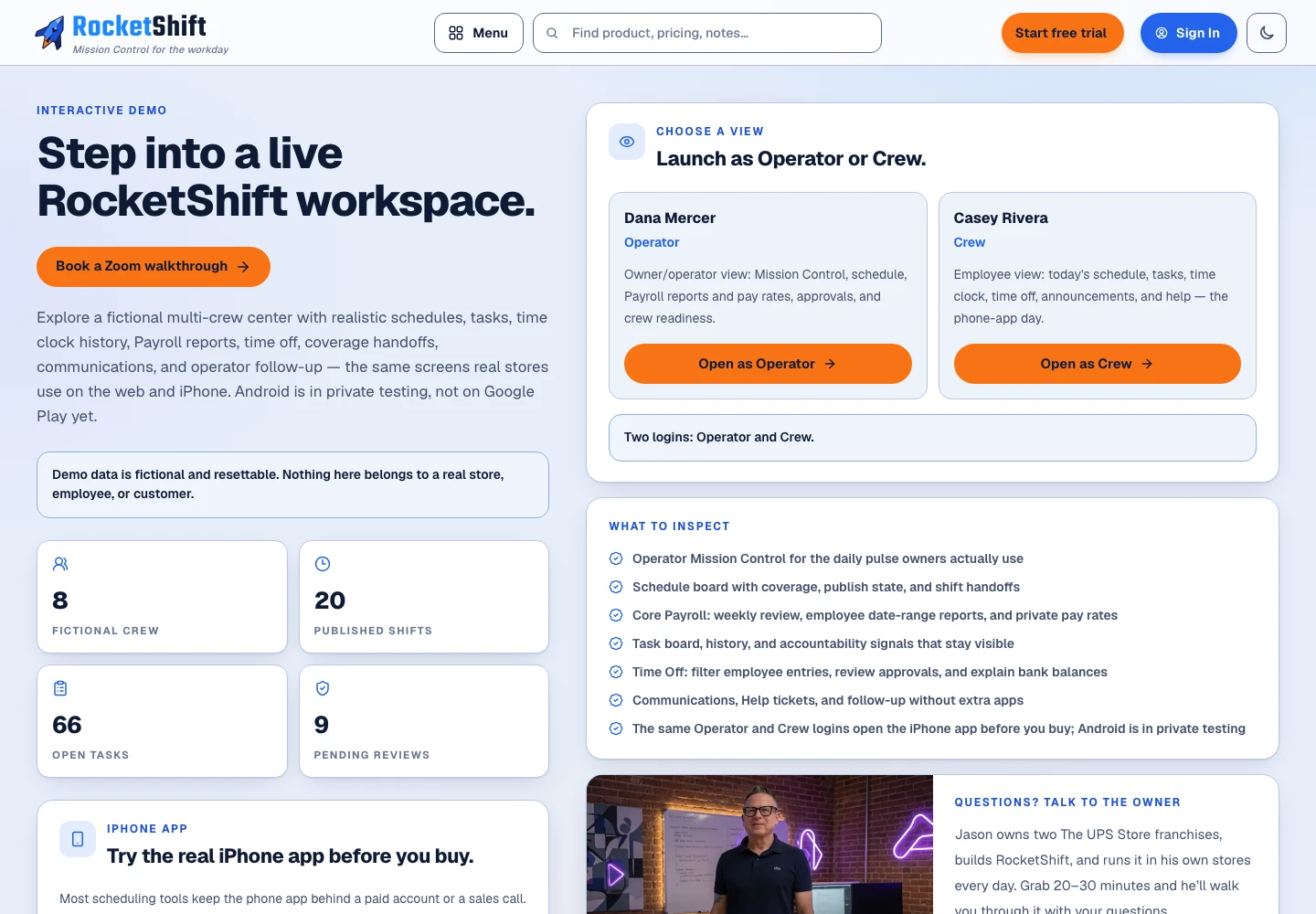
Product screens below use fictional demo people and data. The iPhone images are native app captures; the iPad image is a design preview. Features and availability continue to evolve.
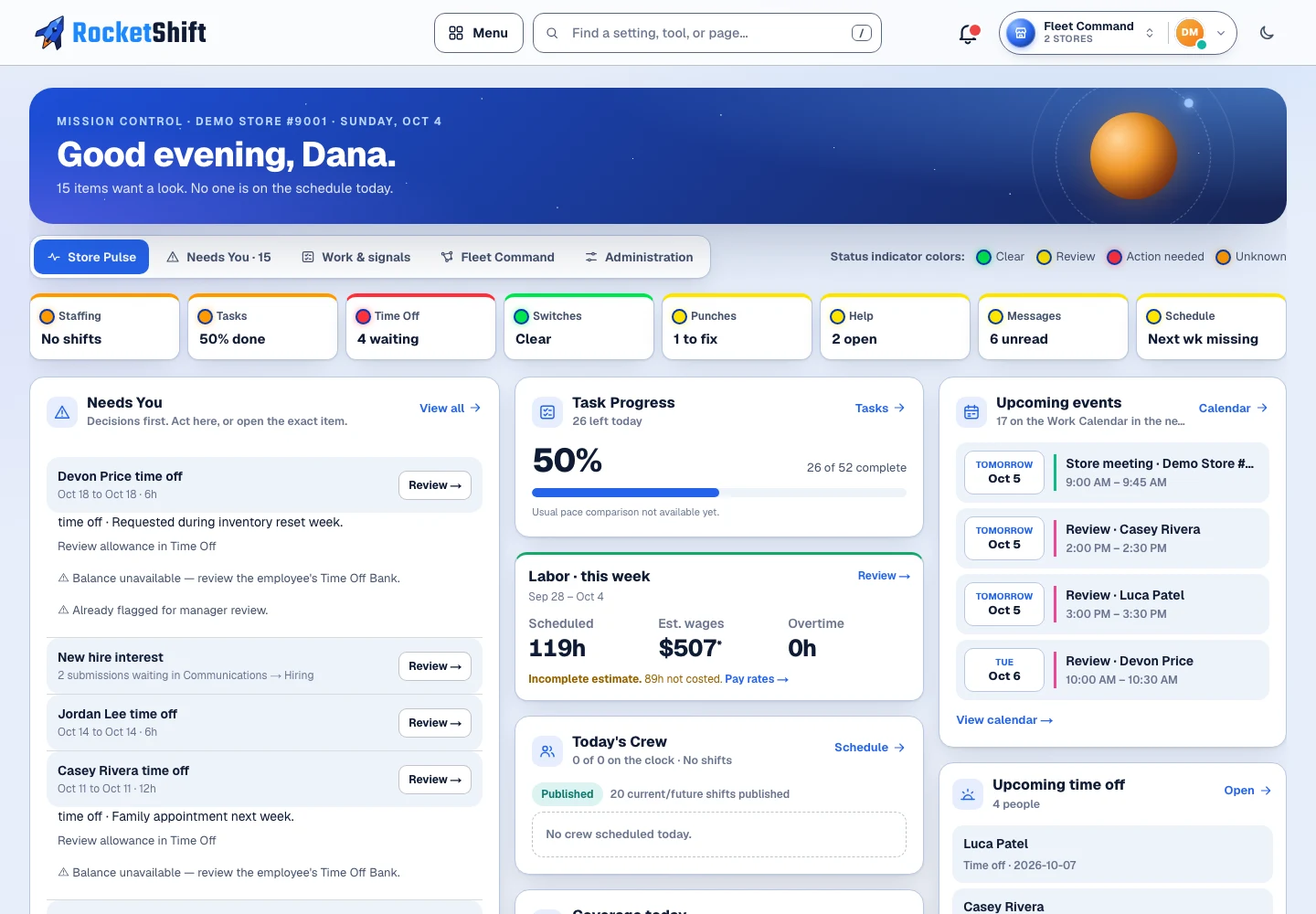
IN YOUR HAND. AT YOUR WORKPLACE.
A phone for a quick check-in. A shared tablet where the team clocks in. A larger screen when it’s time to plan.
The goal isn’t to fit a desktop screen into a pocket. It’s to make each experience useful in its own setting.
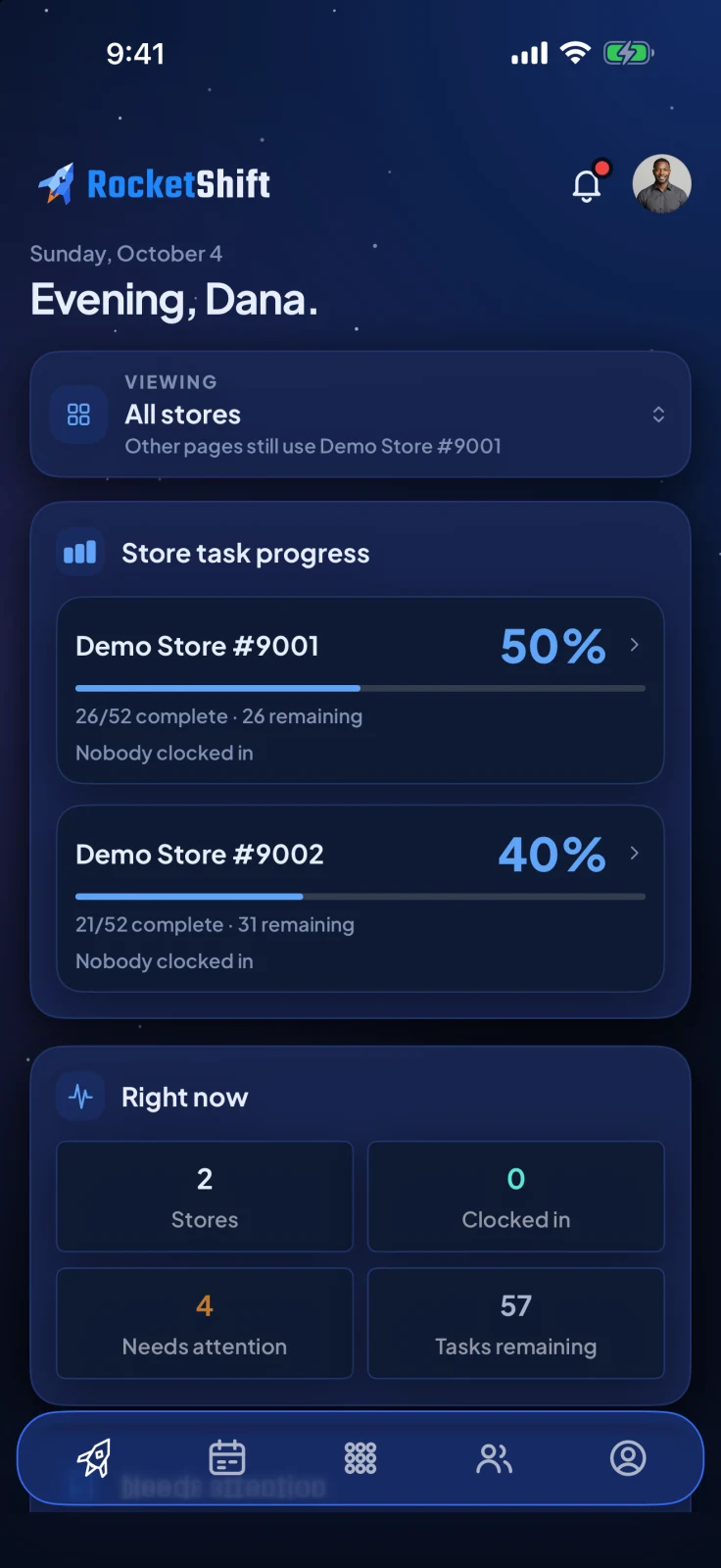
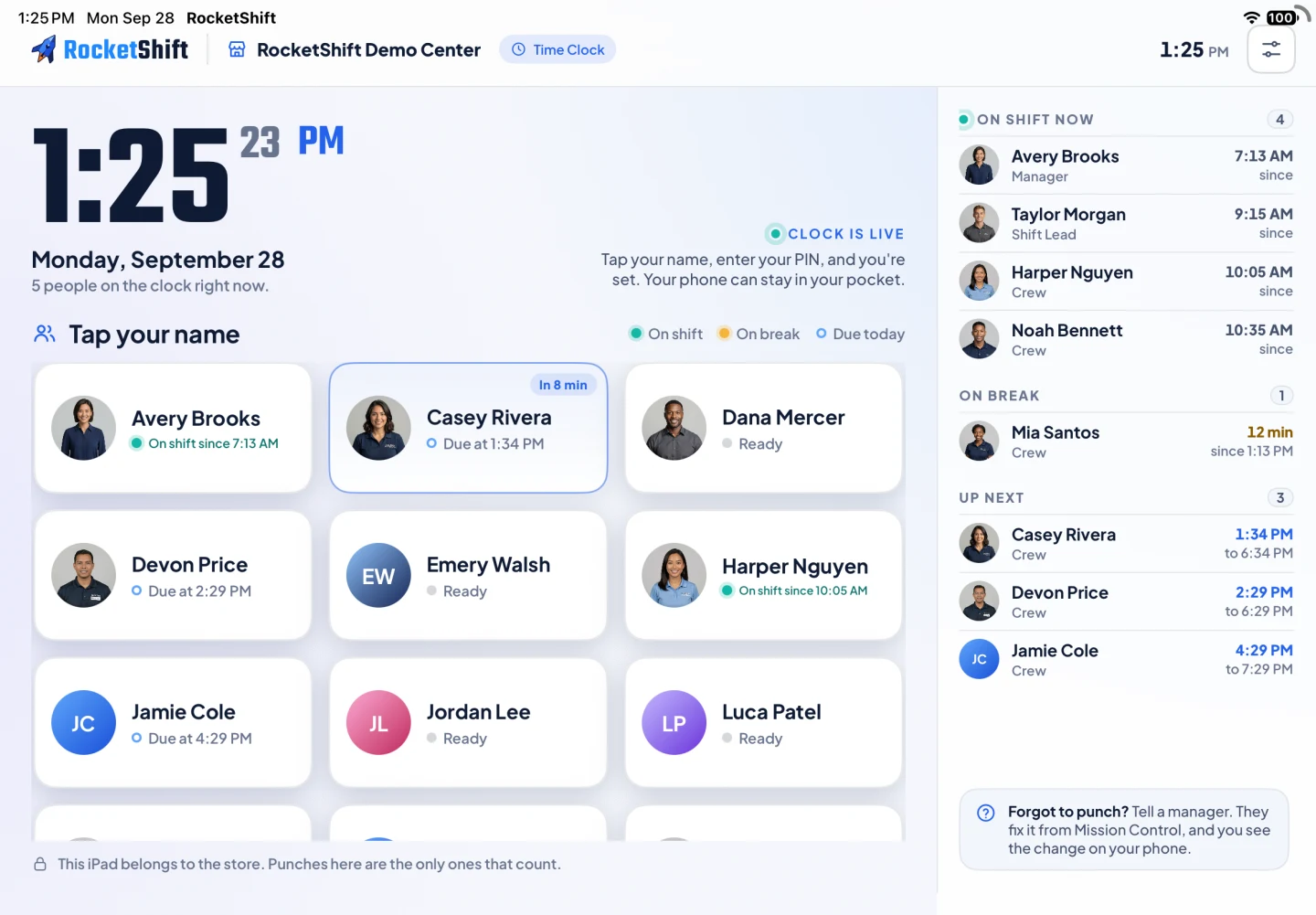
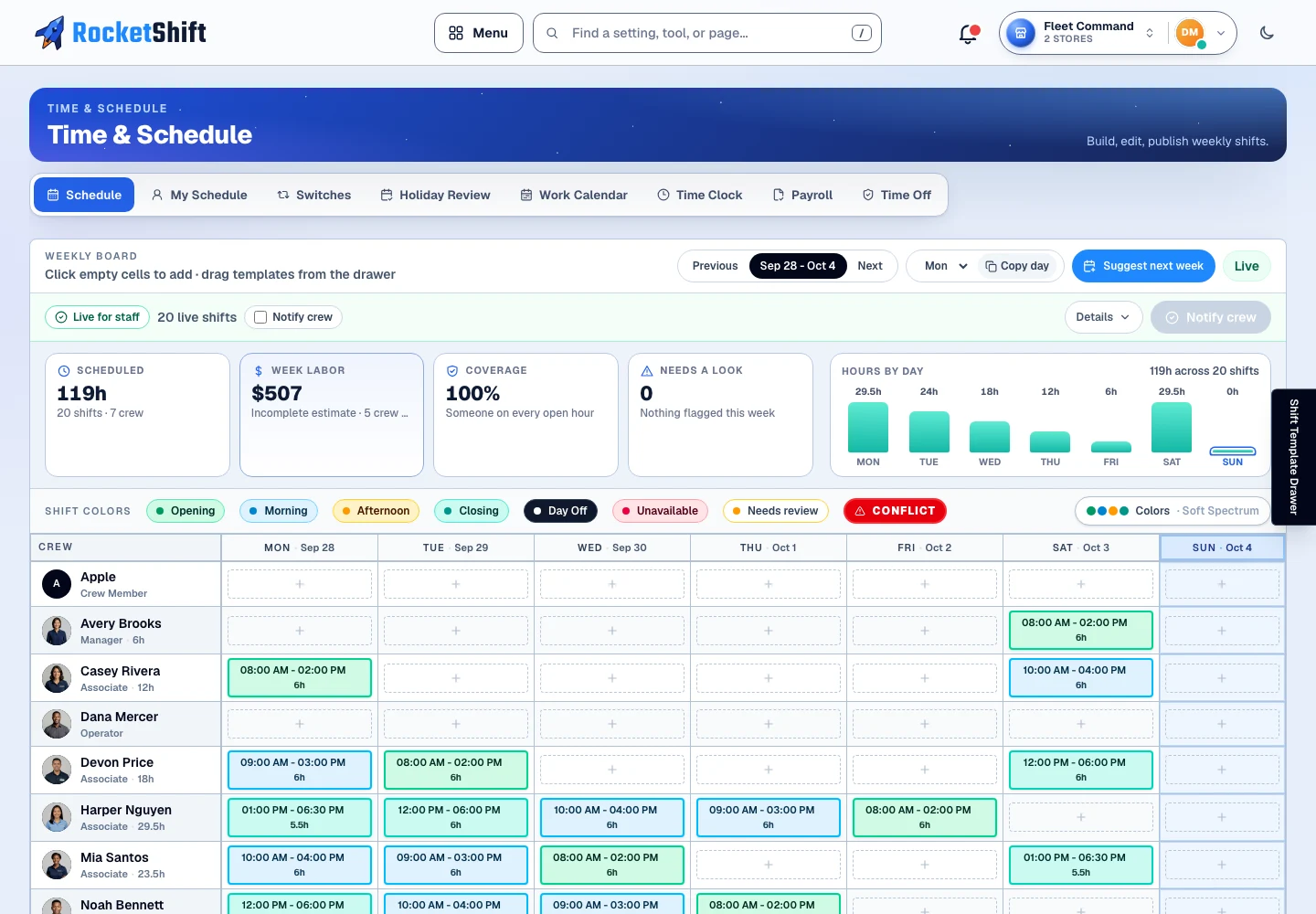
RocketShift wasn’t built around an imagined workday. Jason’s managers use it, point out what isn’t working, ask for changes, and test those changes in the stores.
That feedback keeps the product grounded. A feature has to make sense to the people using it—not just look impressive in a screenshot.
The result is a working product used in Jason’s stores, with a broader vision than the inventory app that started it. It’s still growing, informed by the work it was created to support.
FROM THE INSIDE OUT
The public website introduces the idea. The interactive demo lets someone explore it for themselves, without exposing a real business’s information.
WHAT THIS MEANS FOR YOUR IDEA
Start with a problem you understand. Build something useful. Learn from the people using it. Let that knowledge shape the next step.
That’s the approach behind RocketShift Studio: business experience, thoughtful design, and practical technology, working together.
Tell me what’s on your mind Explore services & pricingAdapted from Jason Armstrong’s RocketShift Origin Story, August 2026, and his reflections on the product’s evolution.